The Us Supreme Court Reviewed the Decision of the Florida Supreme Court Because
Equal Protection? The Supreme Courtroom's Conclusion in Bush five. Gore
past Geoffrey R. Rock
 n Bush v. Gore, candidate Bush challenged the December 8, 2000 decision of the Florida Supreme Court on ii constitutional grounds. He argued that the decision of the Florida Supreme Court allowing a recount of disputed ballots violated both Article Two, Section i and the Equal Protection Clause of the Fourteenth Amendment of the U.s.a. Constitution.
Although I volition devote most of my attending to the Equal Protection issue, the Article Ii issue claim at least passing notice, for although only iii Justices found any merit in this argument, information technology has received some attending recently from conservative legal commentators in their efforts to rescue the Supreme Courtroom'southward decision.
Commodity II, Section 1 provides that, in presidential elections, "each State shall appoint, in such manner as the legislature thereof may direct," the electors to which the State is entitled.
In his concurring opinion in Bush five. Gore, Chief Justice Rehnquist, joined only by Justices Scalia and Thomas, argued that the Florida Supreme Court decision violated this provision. To make this statement, Chief Justice Rehnquist emphasized the discussion "legislature" in Article II, Section 1, and maintained that in its interpretation of the Florida election lawmaking the Florida Court had, in issue, inappropriately substituted its judgment for that of the Florida legislature.
As the Justices who rejected this statement fabricated clear, this is, at best, a novel construction of the United States Constitution. This is and then for several reasons. First, information technology places peculiar weight on the word "legislature," every bit if the framers of the Constitution had actually intended to draw a substantive distinction betwixt the Country, which is expressly empowered to "appoint" its electors, and the State'southward own legislature. This would exist like interpreting the give-and-take "Congress" in the First Subpoena--every bit in, "Congress shall brand no law abridging the liberty of speech or of the press"--to mean that the Get-go Amendment does non employ to the executive and judicial branches of the government, a hyper-literalist interpretation that no courtroom has ever embraced.
Second, the Main Justice'due south argument assumes that this is an advisable thing for federal judicial review. This is hardly obvious. Commodity Ii, Section 1 could hands be read as a purely structural provision that should exist left, except in the about egregious of circumstances, to the States and to the political branches of authorities. Indeed, if at that place was e'er a "political thicket" that the federal courts should avert, it would seem to be a dispute between a state legislature and a state supreme court on a thing of state law concerning a highly-charged political election. And certainly it is ironic that Justices Rehnquist, Scalia and Thomas, of all people, would cover the Article 2 argument. As the champions of judicial restraint, strict construction and federalism, their indulgence of this highly intrusive statement in Bush five. Gore was out of graphic symbol, to say the least.
Tertiary, as even Main Justice Rehnquist admitted, it is near unprecedented for the Supreme Courtroom of the Us to arrogate to itself the potency to overrule a state supreme court on a matter of state law. This is an boggling assertion of federal judicial power. As the Justices who rejected the Article Ii statement made clear, Article II does non grant the Justices of the U.s. Supreme Court "any special authorisation to substitute their views for those of the state judiciary on matters of state law."
Finally, and equally a majority of the Justices ended, the Florida Supreme Court'south interpretation of Florida constabulary was within the premises of constitutionally permissible interpretation. As even Chief Justice Rehnquist conceded, the Florida Election Code was non "well-crafted." Indeed, in several respects relevant to this dispute, it was cryptic, confusing, and cocky-contradictory, and information technology was certainly never designed to deal with the complex questions posed by the 2000 presidential election.
In their efforts to make sense of these oft puzzling provisions, the Florida Supreme Court invoked several familiar rules of statutory construction. For example: "Where two statutory provisions are in conflict, the specific statute controls the full general." "When two statutes are in conflict, the more than recently enacted statute controls the older." "A statutory provision volition not be construed in such a way that it renders meaningless any other statutory provision." And "related statutory provisions must be read as a cohesive whole." Surely, at that place is zip revolutionary here.
Consider, for case, the problem of defining a "legal vote" nether Florida constabulary. This is important because the Florida Election Code expressly includes as a ground for "contesting" an election "the rejection of a number of 'legal votes' sufficient to change or place in doubt the issue of the ballot." A fundamental question was thus whether a punch-card election containing a hanging or dimpled chad could plant a "legal vote" for these purposes.
The Florida Supreme Court held that a "legal vote" may include any ballot from which information technology is reasonably possible to determine the clear intent of the voter, whether or not the republic of chad had been completely punched through--a conclusion, by the way, that is consistent with the law of the clear majority of u.s.a..
In his concurring opinion in the Supreme Court of the United States, even so, Principal Justice Rehnquist argued that this interpretation of Florida law was so irrational, and so flagrantly inconsistent with Florida legislation, that it violated Article II. Principal Justice Rehnquist reasoned that considering almost precincts using punch-card ballots instructed voters to "check your election to be certain your voting selections are clearly and cleanly punched," no "reasonable person" could mayhap count as a legal vote "those ballots that were not marked in the manner that these instructions . . . specified."
Although this is a perfectly rational interpretation of Florida law, it is hardly compelling. In reaching its reverse determination about the definition of a "legal vote," the Florida Court quite reasonably relied upon another provision of the Florida Ballot Code which expressly provides that "no vote shall be declared invalid if there is a articulate indication of the intent of the voter."
Moreover, the Florida Court invoked a long-standing principle of Florida law, derived from the Florida Constitution, which declares the "right of suffrage preeminent." Quoting a 60-year-old Florida precedent, the Florida Court noted that we
must give statutes relating to elections a construction in favor of the citizen's right to vote, and the intention of the voters should prevail when counting ballots. Our election laws are intended to facilitate and safeguard the right of each voter to limited his or her will in the context of our representative democracy.
The Florida Supreme Court thus ended that "the voters hither did everything which the Election Lawmaking requires when they punched the appropriate chad with the stylus. These voters," the Courtroom said,
should not be disenfranchised where their intent may be ascertained with reasonable certainty only because the chad they punched did not completely dislodge from the ballot. Such a failure may be attributable to the fault of the election government for failing to provide properly perforated paper, or it may be the result of the voter's disability or inadvertence. Whatever the reasons, where the intention of the voter can be fairly and satisfactorily ascertained, that intention should be given effect.
Now, I am not here to argue that the decision of the Florida Supreme Courtroom was necessarily correct in every respect as a affair of state constabulary. To the contrary, it's easy to parse these statutes in many different ways, and even the Florida Supreme Court was divided four-to-three. Moreover, if I were a Justice on the Florida Supreme Court, I might well have disagreed--perhaps even strongly disagreed--with at least some of the Court's conclusions.
But to say that I would have disagreed is quite dissimilar from saying that the Florida Supreme Court's conclusions were and then irrational or so fundamentally flawed that a Justice of the Usa Supreme Court could legitimately sweep them aside, declare them in upshot non "constabulary" at all, and substitute his own judgment most the meaning of state law.
In the stop, then, I agree with the bulk of the Justices of the United States Supreme Court who ended that the Florida decision was sufficiently "rooted in long-established precedent" and sufficiently "consistent with the relevant statutory provisions" that it did not even heighten "a colorable question" nether Article Ii of the federal Constitution.
Arguing equal protectionLet me turn now to the existent middle of the case--the Supreme Court's holding that the decision of the Florida Supreme Court violated the Equal Protection Clause of the Fourteenth Amendment. The crux of this property is captured in the majority's observation that, although the "intent of the voter" standard "is unobjectionable as an abstract proposition," a ramble problem still "inheres in the absence of specific standards to ensure its equal application."
The majority were concerned that, in searching for the "intent of the voter," and in giving significant to ballots with dimpled and hanging chads, "the standards for accepting or rejecting contested ballots might vary not merely from canton to county only [even] inside a single county." The majority therefore concluded that the "recount mechanisms implemented [by] the Florida Supreme Court exercise not satisfy the minimum requirement for non-arbitrary treatment of voters necessary to secure the cardinal right" to equal protection.
Although this argument was endorsed past seven of the nine Justices--all but Stevens and Ginsburg--it has more often than not been treated with derision by liberal and conservative commentators akin. As my liberal colleague Cass Sunstein has noted, the Court's Equal Protection decision "lacked all support in precedent and history . . . and clearly ignored a host of problems as serious as those it addressed." Not to be outdone, my bourgeois colleague Richard Epstein has sniped that the Court'southward equal protection statement is "a confused nonstarter at best, which deserves much of the scorn that has been heaped upon it."
Frankly, I am more sympathetic to the Court's reasoning than near of its critics, but let me begin with the contemptuousness. What practise the critics say? First, they point out that this argument is entirely unprecedented and, indeed, comes completely out of the blue. This is substantially truthful.
Offset in 1964, in decisions like Harper v. Virginia Board of Elections, which invalidated the poll tax, and Reynolds v. Sims, which invalidated malapportioned legislative districts, the Warren Court first embraced the principle that laws that grant the right to vote on a selective basis must be carefully scrutinized because they affect the very "foundation of our representative government."
Although the question posed in Bush-league v. Gore was quite unlike from the ones posed in cases similar Harper and Reynolds, which involved laws that clearly discriminated confronting readily identifiable groups of voters, the principle underlying those early Warren Courtroom decisions could, in my judgment, back up the Courtroom's determination in Bush 5. Gore that, in counting votes, a Land must use standards and processes that ensure that ballots are counted in a consequent and equal way.
However, and here's the rub, it's been some thirty years since the Supreme Court of the United States has actually applied the principles articulated in cases like Harper and Reynolds, and both the Burger and Rehnquist Courts, and most of the Justices who eagerly embraced this argument in Bush 5. Gore, have steadfastly rejected this principle for the ameliorate office of three decades. This is the sort of ramble statement that Justices Warren, Brennan and Douglas could heartily endorse, only for Justices like Rehnquist, Scalia and Thomas all of a sudden to don this drapery seems strange, indeed.
Second, critics of the Court's Equal Protection analysis in Bush-league take noted the rather peculiar limitations the majority attempted to identify on the implications of their own logic. For example, in a curious effort to constrain the reach of their conclusion, the bulk pointedly noted that "our consideration" of the Equal Protection Clause's affect on ballot processes "is limited to the present circumstances."
Moreover, and more to the point, the bulk explicitly declared that "the question earlier the Court is not whether local entities . . . may develop different systems for implementing elections" inside a single State. In other words, although holding that the employ of the "intent of the voter" standard to count ballots violates the Equal Protection Clause considering that standard can be applied differently in different parts of a State, the majority expressly eschewed saying annihilation about the much more dramatic Equal Protection problem presented by the Florida election process--the fact that dissimilar counties and precincts used very different voting technologies, that those dissimilar technologies had very dissimilar probabilities of undercounting the votes of individual citizens, and that there was a articulate correlation between the use of those technologies that maximized undercounting and the relative poverty of the citizens of a particular county or precinct.
As Professor Pam Karlan of the Stanford Police force School has observed: "A court that believes that the real problem in Florida was the disparities in the transmission recount standards, rather than the disparities in a voter'south overall chance of casting a ballot that is actually counted, has strained at a gnat just to ignore an elephant."
Now, in fairness to the majority, I think at that place may be at least a partial reply to this criticism. It is a long-standing principle of Offset Amendment law that the standardless licensing of speech is unconstitutional. A city, for example, may not constitutionally grant a governmental official standardless say-so to decide which speakers can and cannot speak in a city park. Rather, to limit the risk of discriminatory application, the city must expressly focus the licensing official'southward dominance on such permissible considerations as fourth dimension, place and manner, and must expressly prohibit the official's consideration of such impermissible factors as the content of the speech.
Ane might argue, past illustration, that in counting votes in an election, a State must define with similar clarity the specific factors that may be considered in deciding whether a detail election is or is not to be counted, and that the "intent of the voter" standard is just too vague to exist relied upon in the highly charged context of vote-counting. Thus, in order to limit the possible abuse of discretion, the State arguably must specify precisely whether it will or will not count dimpled or hanging chads as "legal votes."
On this view, ane might conclude that the "intent of the voter" standard posed a singled-out Equal Protection problem that does not necessarily implicate the issue of dissimilar voting methods in different parts of the State. Only the majority didn't even contemplate such an argument. They thought it sufficient to say, without more than, "Nosotros go this far, and no farther."
Third, the majority'southward v-to-four decision non to remand the case to enable Florida to deport a constitutionally appropriate recount with a more than specific definition of "intent of the voter" has been attacked by most everyone. The majority asserted that because the Florida legislature may have intended to take advantage of the "safe harbor" provision of federal law, which required a choice of electors past December 12--the date of the Supreme Court's decision, at that place was simply no time left for whatever farther recount.
There is about no one who volition defend this conclusion as a affair of police force. Even as respected a bourgeois legal scholar equally Michael McConnell has strongly chastised the Court on this count, noting that although the Florida legislature could theoretically have adopted such a statute, in fact information technology never did so.
How, so, can i explain the refusal of these v Justices to remand the case to Florida for a further recount consistent with their interpretation of the Equal Protection Clause? Some of the Court'south about fervent apologists accept argued that these Justices, in a burst of noble pragmatism, did the nation a service past putting an finish to a controversy that was threatening to spin out of control. Frankly, I would have been more impressed with these particular Justices' nobility if the effect of their decision had been to install as president the Democratic candidate for the job.
But, in the bodily circumstances presented, I find this statement wishful, at best. There was, in fact, no political crunch facing the nation. There was no social unrest, no paralysis of government, no lack of subject field in foreign affairs, no instability in the fiscal markets, no crisis in consumer confidence, no stockpiling of appurtenances. Perhaps in that location was too much C-Bridge, simply that hardly threatens the Republic. Surely, there was no more of a crisis facing the nation during the Bush/Gore postal service-election dispute than there was during the abortive endeavor to impeach the President. Just no i called that to a halt to avoid a "crunch."
Would a further recount have been messy? You bet. In that location were all sorts of things that could have gone incorrect subsequently December 12 both in Florida and in Congress, and non many that could have gone correct. Merely was this a constitutionally legitimate reason for the Supreme Court of the U.s. to halt the recount of legal votes in Florida? No.
The plain and elementary fact is that if this matter could not have been finally resolved in Florida prior to the convening of the Electoral College, the appropriate forum for determining the outcome of the presidential election was Congress, the politically answerable branch of regime and the branch that is expressly charged both by the Constitution and by federal police force with this responsibility. No one has given this dominance to the Supreme Court of the United states of america.
After the Hayes-Tilden election of 1876, the nation enacted legislation to deal with precisely this sort of controversy, and advisedly reserved to Congress the responsibility to resolve contested presidential elections. As Senator Sherman noted in introducing this legislation in 1886, Congress expressly contemplated and rejected a role for the Supreme Court in such controversies:
"It has been proposed," Senator Sherman explained, that in the event of a dispute virtually the legitimacy of Electors,
. . . the thing should exist referred to the Supreme Court. But . . . we ought not to mingle our nifty judicial tribunal with political questions. It would be a very grave fault indeed to refer such questions, in which the people of the country were aroused, and near which their feelings were excited, to this bang-up tribunal, which afterward all has to sit upon the life and holding of all the people of the U.s.. Information technology would tend to bring that court into public odium . . . .
In Bush five. Gore, the five-member majority ignored not only this wisdom, but the law itself. Their conclusion to prevent Florida from counting what the Court itself accepted every bit "legal votes" nether state law may have been pragmatic, only it was not lawful.
Politics in black robes?I'd like to conclude with what, for me, is the well-nigh dispiriting facet of this whole deplorable episode. I had the great privilege of serving every bit a law clerk to a Justice of the United States Supreme Court. For more than a decade, I have edited the Supreme Courtroom Review and I co-writer the nation's leading constitutional constabulary casebook. I accept taught constitutional law for more a quarter of a century, even while serving every bit dean and provost.
As a teacher of constitutional law, I am often asked by skeptical students: Isn't constitutional law just politics in black robes? Don't the Justices just vote their political preferences? Isn't all this "stuff" almost the Constitution only a charade? I accept e'er rejected this understanding of the Supreme Court and of constitutional law.
The cases presented to the Supreme Court are rarely governed by clear precedent. If the cases were easy, they would not be in the Supreme Court. Moreover, the Court is frequently chosen upon to requite meaning to the highly opened-textured provisions of our Constitution: "Congress shall make no law abridging the liberty of speech." "No State shall deny to any person the equal protection of the laws." "No person shall be deprived of life, freedom or property without due process of police force." These terms are not cocky-defining.
In this context, it is hardly surprising that individual Justices will often make up one's mind specific controversies in means that reverberate their personal backgrounds, experiences, values and institutional assumptions. In the absenteeism of controlling precedent and self-defining linguistic communication, it is inevitable that the Justices will bring such considerations to bear in giving meaning to the primal guarantees of our Constitution. How they think about equality, or liberty or federalism or poverty or efficiency volition inescapably affect this understanding of these provisions.
This is both inevitable and appropriate, and it is as true for so-chosen liberal Justices as it is for the conservatives. Only what has sustained my religion in the Supreme Court equally an institution, and in constitutional law equally a key function of our legal and political organization, is the fact that, regardless of their partisan affiliations, the Justices historically accept strived sincerely and in good conscience to give fair meaning to the guarantees of our Constitution. They do not trade votes, or accept bribes, or let partisan political considerations to dictate their decisions.
And that brings me back to Bush v. Gore.
The majority's determination in Bush v. Gore that the recount process ordered by the Florida Supreme Courtroom violated the Equal Protection Clause was a highly activist, merely plausible interpretation of the Constitution. What was disheartening to me was not the constitutional principle embraced by the majority, but the votes cast by Justices Rehnquist, Scalia and Thomas in support of that decision, votes that were dispositive of the case, and of the presidency of the The states.
No 1 familiar with the jurisprudence of Justices Rehnquist, Scalia and Thomas could perchance take imagined that they would vote to invalidate the Florida recount process on the footing of their own well-adult and oft-invoked approach to the Equal Protection Clause.
In the decade leading up to Bush-league five. Gore, Justices Rehnquist, Scalia and Thomas cast approximately 65 votes in non-unanimous Supreme Courtroom decisions interpreting the Equal Protection Clause. Xix of those votes were cast in cases involving affirmative action, and I will return to them in a moment. Of the 46 votes that these Justices cast in cases that did not involve affirmative activeness, Justices Rehnquist, Scalia and Thomas collectively cast only two votes to uphold a claimed violation of the Equal Protection Clause. Thus, these three Justices found a violation of Equal Protection in only four percent of these cases.
For the sake of comparison, over this same period, and in these very same cases, the colleagues of Justices Rehnquist, Scalia and Thomas collectively voted 74 per centum of the time to uphold the Equal Protection Clause merits. 74 per centum versus iv pct.
Against this background, one must wonder why Justices Rehnquist, Scalia and Thomas suddenly discovered ability and beauty in the Equal Protection Clause in Bush v. Gore. Indeed, as a group they cast more than votes (three, to be exact) to uphold the Equal Protection Clause claim in Bush-league five. Gore than they had previously cast in all of the non-affirmative action Equal Protection Clause cases that they had considered in the previous decade.
Of form, those other cases were different, for they involved laws that disadvantaged blacks, women, gays, the disabled and the poor--groups that are surely less deserving of concern under the Equal Protection Clause than the casher of the Courtroom'due south conclusion in Bush-league.
Merely this is non a fair characterization. Afterwards all, I have excluded from the above assay the votes of Justices Rehnquist, Scalia and Thomas in affirmative activeness cases. In those cases, these 3 Justices have consistently demonstrated the same spirit of bold and innovative interpretation of the Equal Protection Clause that they manifested in Bush five. Gore. Indeed, over the by decade, these iii Justices accept collectively cast nineteen votes to concord unconstitutional diverse forms of affirmative activeness. This represents 100 percent of their votes in these cases--a perfect record. (Their colleagues, by contrast, accept voted only 33 pct of the time to invalidate such programs.)
What does this tell the states? It tells us that Justices Rehnquist, Scalia and Thomas have a rather distinctive view of the Usa Constitution. Apparently the Equal Protection Clause, which was enacted after the Civil War primarily to protect the rights of newlyfreed slaves, is to be used for two and but two purposes--to invalidate affirmative action and to invalidate the recount process in the 2000 presidential election.
Equally Professor Robert Post of the Berkeley Police force School has observed, "I do non know a unmarried person who believes that if the parties were reversed, if Gore were challenging a recount ordered by a Republican Florida Supreme Court," that Justices Rehnquist, Scalia and Thomas "would have reached for a startling and innovative principle of constitutional police to mitt Gore the victory."
You can depict your own conclusions.
ABOUT THE AUTHOR | Geoffrey R. Stone
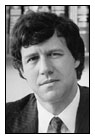 Geoffrey R. Stone is the Harry Fifty. Kalven, Jr. Distinguished Service Professor of Law at the Academy of Chicago. He received his undergraduate degree from the Wharton School of Finance and Commerce of the Academy of Pennsylvania before attending the University of Chicago Law Schoolhouse, where he served as editor-in-main of the Constabulary Review.
Following graduation in 1971, Stone served as law clerk to Judge J. Skelly Wright of the U.S. Court of Appeals for the District of Columbia Circuit. He spent the side by side twelvemonth as law clerk to Justice William J. Brennan, Jr. of the Supreme Court of the United States. Stone was admitted to the New York Bar in 1972 and has been a fellow member of the kinesthesia at the University of Chicago since 1973. He is currently a member of the National Advisory Council of the American Civil Liberties Wedlock and a member of the Board of Governors of Argonne National Laboratory.
Stone has taught courses in ramble police force, ceremonious process, evidence, criminal procedure, contracts, and regulation of the competitive process. He has written a casebook with Cass Sunstein in the area of constitutional law. He has also written numerous manufactures concerning such matters every bit the freedom of speech and printing, freedom of religion, the constitutionality of police use of secret agents and informants, the privilege against self-incrimination, the Supreme Court, and the FBI. Mr. Rock is the editor, with David Strauss and Dennis Hutchinson, of the Supreme Court Review.
COPYRIGHT | A version of this article was delivered at the Federal Bar Clan in Chicago on May 23, 2001. Copyright 2001 The University of Chicago.
Source: https://fathom.lib.uchicago.edu/1/777777122240/
0 Response to "The Us Supreme Court Reviewed the Decision of the Florida Supreme Court Because"
Post a Comment